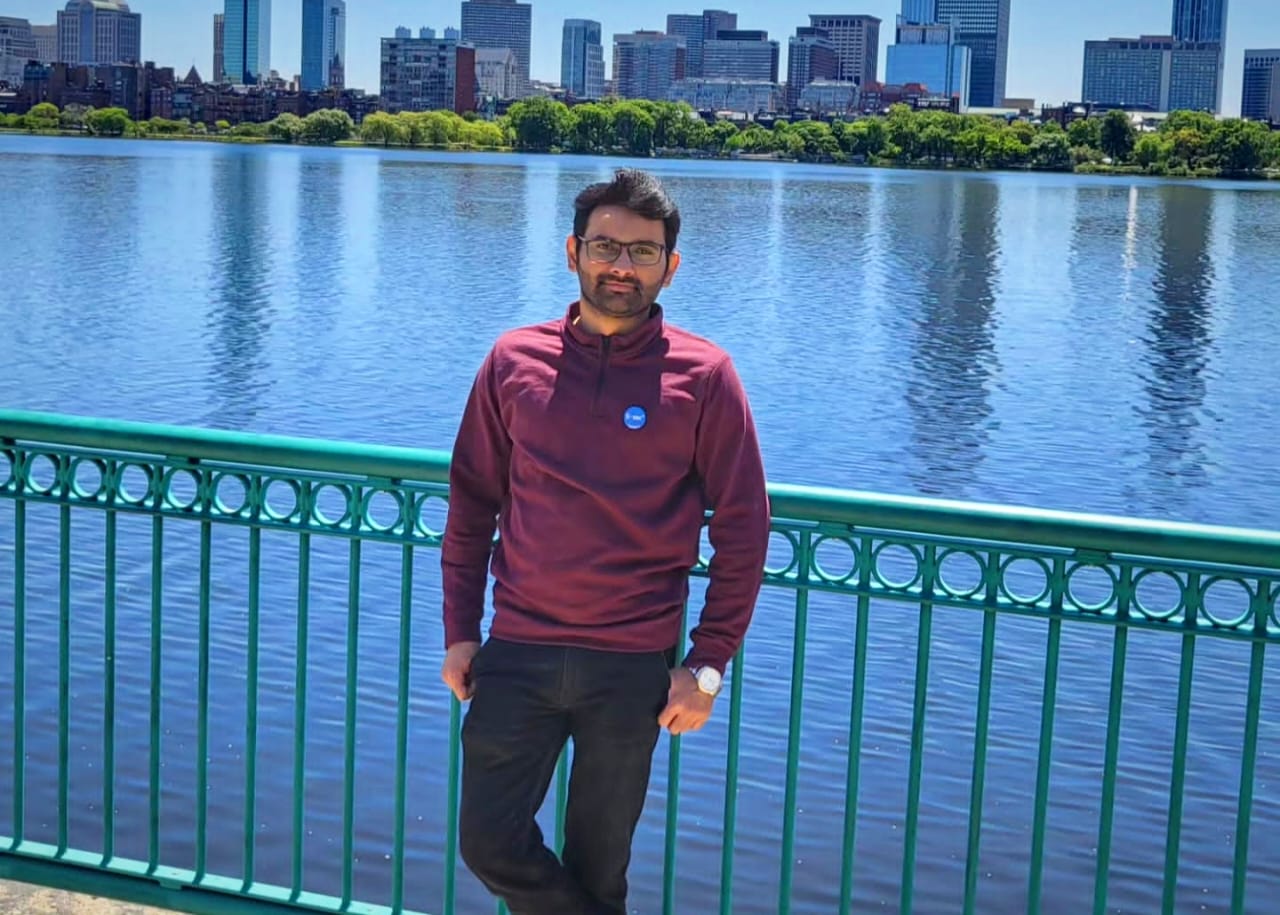

Research Scientist
Institute for Carbon Management
Prior appointmentElectrochemistry · Materials · Manufacturing
Scientist Engineer Builder
I work on electrochemical technologies for energy, climate and manufacturing.
My research spans carbon capture, lithium recovery, energy storage and conversion, anodizing, electroplating, and nanomaterials and ion-selective membranes.
I also explain science and engineering on YouTube
Institute for Carbon Management
Prior appointment
Lehigh University
 HOKKAIDO
Hokkaido University

UET Lahore
My training spans chemistry, materials science and chemical engineering. After my PhD at Lehigh, I worked as a research scientist at UCLA’s Institute for Carbon Management. I now work in manufacturing engineering.
I work across research, engineering and technology development, from understanding a material’s behavior to testing an electrochemical system. My experience includes peer-reviewed research, patent development, startup commercialization and scientific communication.
I use AI tools for research, data analysis and workflow automation, and am exploring how they can support manufacturing. I’m interested in approaches that can be tested, understood and put to useful work.
Research & publications
Research with collaborators across electrochemical separations, energy storage and conversion, and materials processing.
Google ScholarElectrochemical CO₂ separation and multifunctional supercapacitors.
Carbon-capture research Structural supercapacitorsIon-selective materials and membranes for lithium recovery.
Direct lithium extraction paperLocalized electrochemical fabrication, metal deposition and functional surfaces.
Localized anodizing Metal microprintingCathode materials for electrolysis, including seawater electrolysis.
Cathodes for Electrolysis — patent applicationPaper titles link to the publisher.
11 journal papers shown
Mixed-matrix ion-exchange membranes for selective lithium transport during electrodialysis.
Muhammad Bilal and Sandip Pal contributed equally.
ACS Applied Materials & Interfaces 18(4), 6769-6781 (2026).
DOI: 10.1021/acsami.5c20493
A review of SSA mechanisms, electrode materials, charging protocols and scale-up questions.
Trends in Chemistry 7(1), 43-55 (2025).
DOI: 10.1016/j.trechm.2024.11.003
How oxygen and electrolyte composition influence supercapacitive CO₂ capture.
Angewandte Chemie International Edition 63(39), e202404881 (2024).
DOI: 10.1002/anie.202404881
Bipolar electrode stacks for scaling supercapacitive swing adsorption.
Small 20(34), 2303243 (2024).
DOI: 10.1002/smll.202303243
The role of activated-carbon electrode materials in reversible CO₂ adsorption.
Advanced Sustainable Systems 7(11), 2300250 (2023).
DOI: 10.1002/adsu.202300250
The influence of operating voltage on supercapacitive CO₂ capture.
Small 19(24), 2207834 (2023).
DOI: 10.1002/smll.202207834
Localized electrochemical measurements with a 3D-printed cell and optical microscopy.
Journal of The Electrochemical Society 168(6), 061505 (2021).
DOI: 10.1149/1945-7111/ac07c1
Multicapillary droplet cells for localized metal deposition and microprinting.
Read the author manuscriptMaterials Today Communications 26, 102053 (2021).
DOI: 10.1016/j.mtcomm.2021.102053
3D-printed flow cells for simultaneous anodizing of selected areas.
Read the open-access articleJournal of Advanced Research 26, 43-51 (2020).
DOI: 10.1016/j.jare.2020.06.019
Fabricating localized porous-alumina patterns using microdroplet cells.
Journal of The Electrochemical Society 167(8), 081501 (2020).
DOI: 10.1149/1945-7111/ab8877
Carbon-fiber composites combining structural and electrochemical energy-storage functions.
Published under the name Muhammad B Zafrullah. First published online in 2018.
Journal of Composite Materials 53(10), 1401-1409 (2019).
DOI: 10.1177/0021998318802622
Doctoral dissertation · Lehigh · 2024
Muhammad Bilal · PhD in Chemistry
Preprint · ChemRxiv · 2024
Jiajie Li, Muhammad Bilal and Kai Landskron. Experiments using 400 ppm CO₂ in nitrogen. Posted as a preprint.
Research coverage · Chemistry & Industry · 2023
Bárbara Pinho’s report on the carbon-capture research.
Published patent application · 2026
Electrodes comprising cobalt and nickel, electrochemical systems using them, and methods of use. The application includes work relevant to seawater electrolysis.
Full published application · 31 pages · 1.1 MB
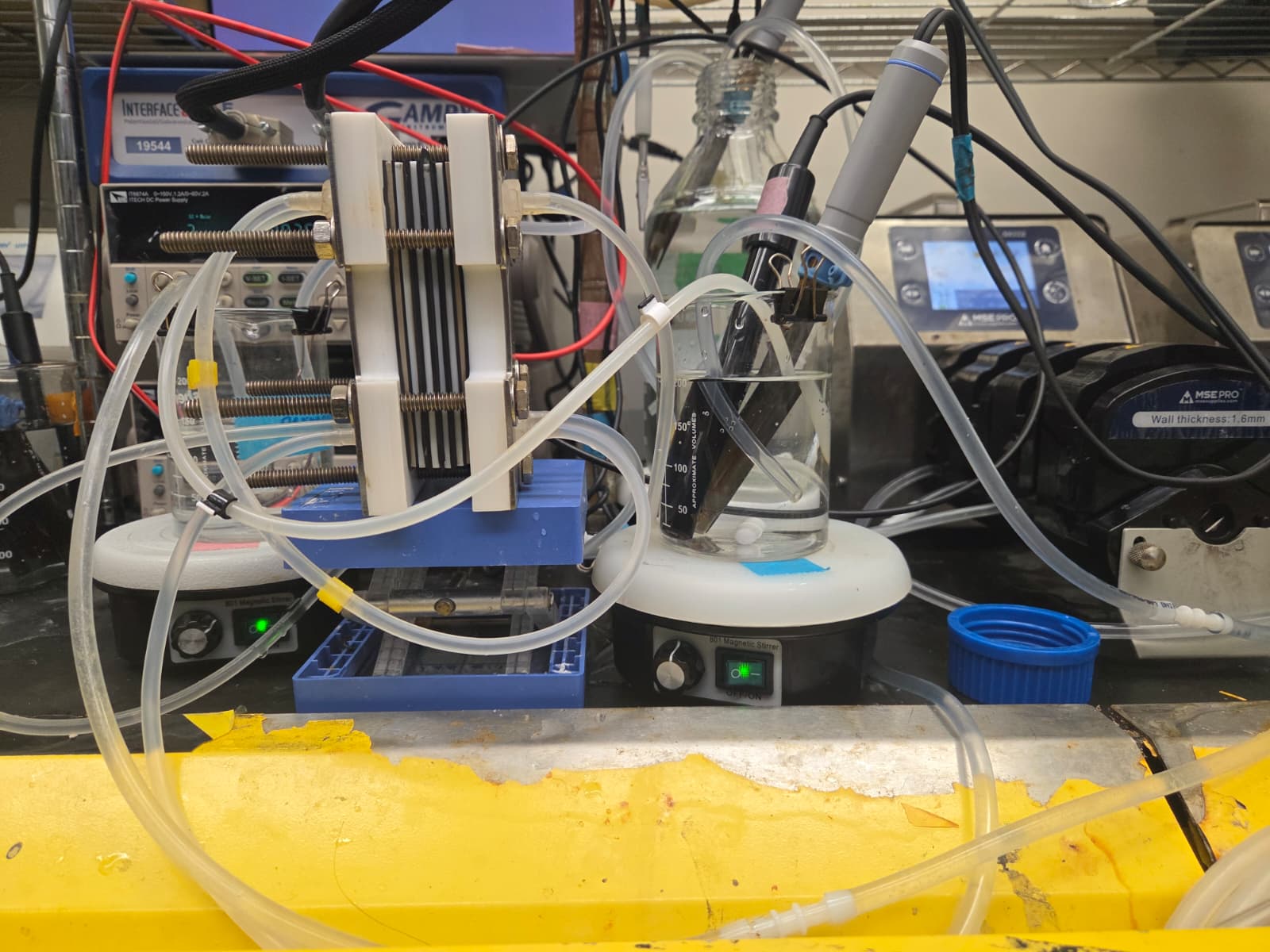
Experimental & manufacturing work
Cells, materials, research figures and manufacturing systems from my work. Open an image to take a closer look.
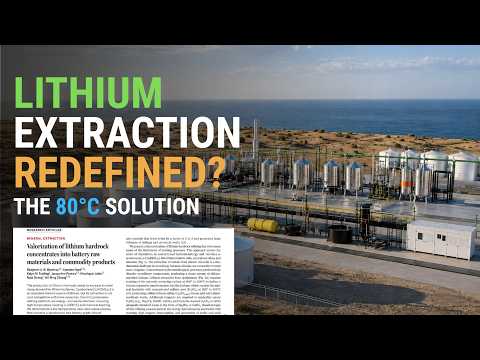
Discuss a related problemI study materials and membranes for lithium recovery, including how ion transport and electrochemical conditions affect selectivity.
Read the lithium extraction paperBilal Research on YouTube
I make visual explanations of research in electrochemistry, energy, climate and manufacturing: how a process works, what the experiments show, and what remains to be understood.
Explore the channel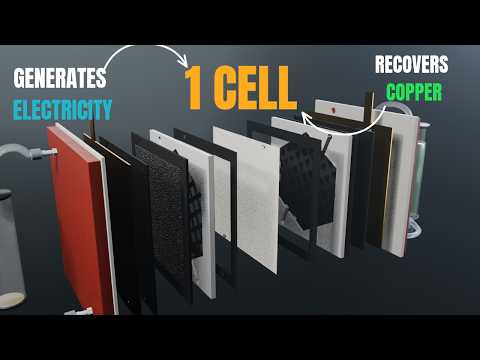 Watch on YouTube ↗
 Watch on YouTube ↗
Research explained through animation and visual storytelling.
Technical focus
How I work
I like working from first principles, then testing the explanation against what happens in the lab or on the manufacturing floor.
Understand who needs a better answer and what would make a difference.
Identify the chemistry, physics and constraints that govern the system.
Turn an idea into an experiment. Let the measurements guide the next step.
Consider reliability, safety, manufacturing, economics and scale early.
Build together
I’d like to hear from researchers, engineers and founders working on related problems. A research question, a process that needs improving, or an early idea is a good place to start.
My longer-term aim is to build an electrochemical technology company and, over time, a research institute. I’m taking that forward through research, prototypes and conversations with people who want to build.
Electrochemical separations, materials, energy storage and conversion, or a shared experimental question.
Discuss the research 02Process development, failure analysis, prototyping, technical feasibility and manufacturing problems.
Describe the challenge 03Explore a research-based idea in energy, climate or materials, and the work needed to test it.
Start a conversationA short note about your work and what you have in mind is enough.
I hope to use the skills God has given me to do useful work for people.